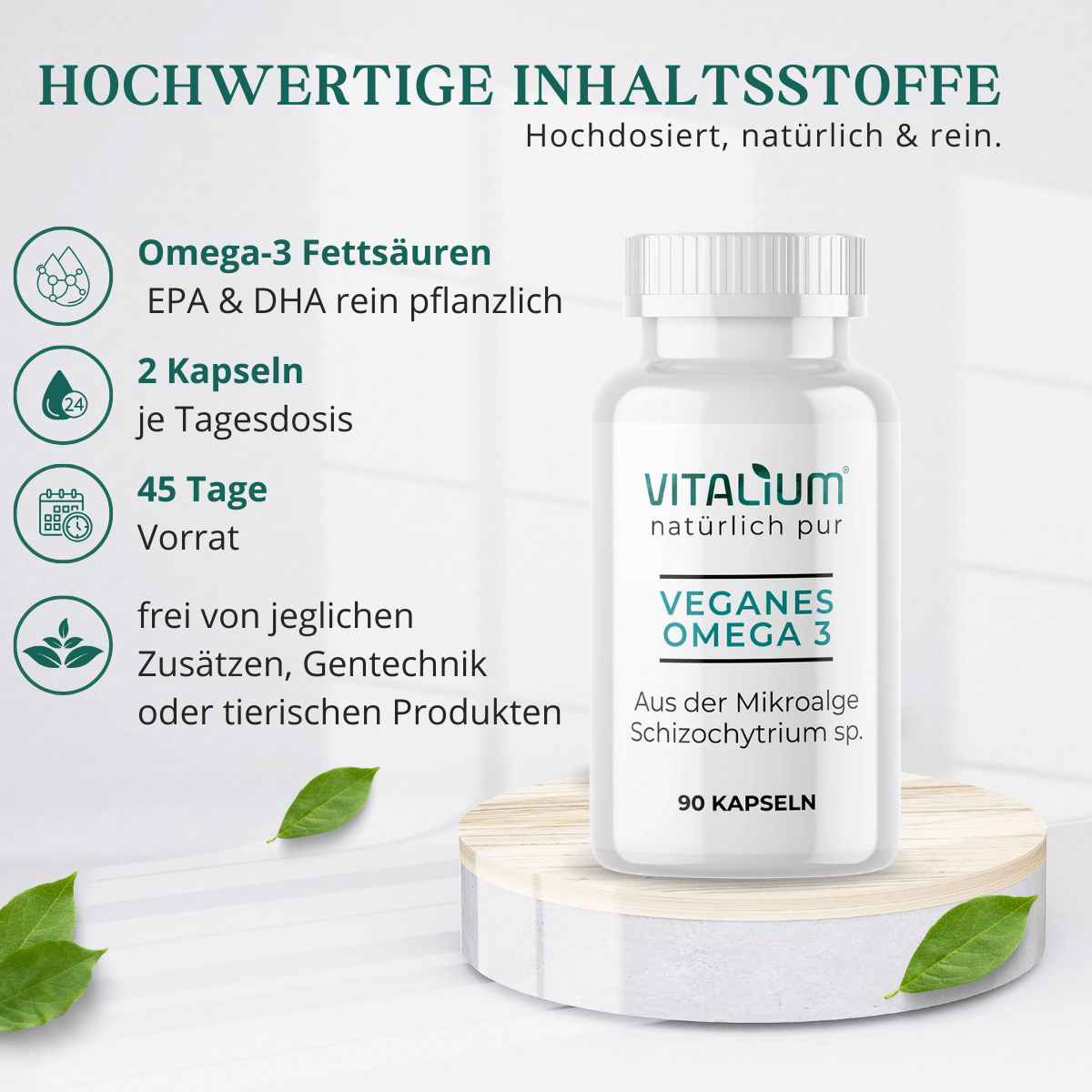
Two capsules daily
Together, they provide a daily serving of 648 mg of EPA and DHA.


Pay securely and easily with:


Your payment information is processed securely. We do not store credit card details nor have access to your credit card information.

The algae oil
Our omega-3 comes from algae oil from the microalga Schizochytrium sp. by DSM. It provides the long-chain omega-3 fatty acids DHA and EPA, which are otherwise mainly known from oily sea fish.
Straight from the source
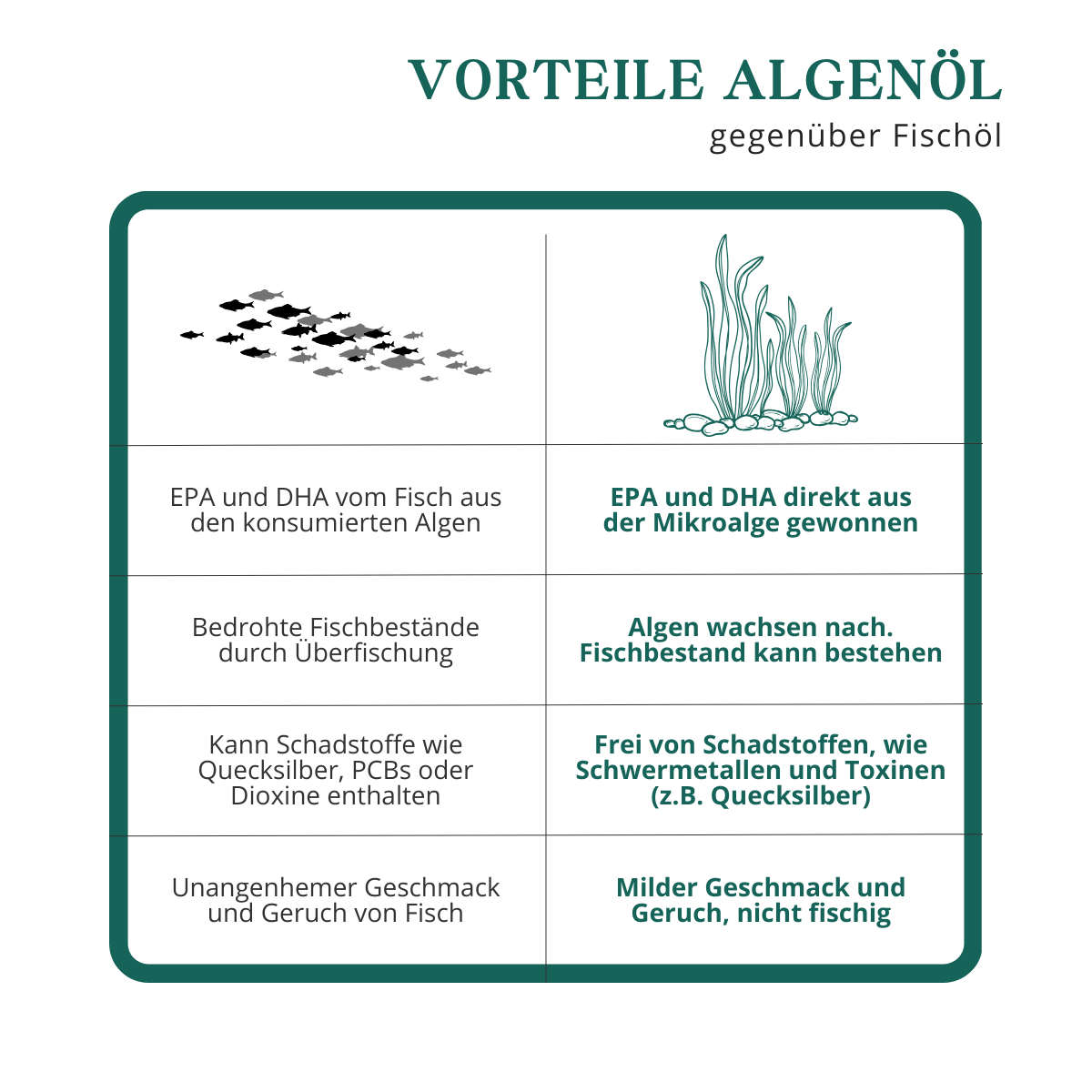
Fish obtain EPA and DHA from their diet; microalgae are at the start of the food chain. We take the direct route and use the oil from the algae itself.
From cultivated microalgae
The microalgae Schizochytrium sp. is cultivated in closed systems. The EPA and DHA used in our capsules are derived from these microalgae and therefore contain no fish oil whatsoever.
Vegan
Capsule shell made from HPMC (cellulose), free from gelatine and animal-derived ingredients.

Omega-3 & Omega-6
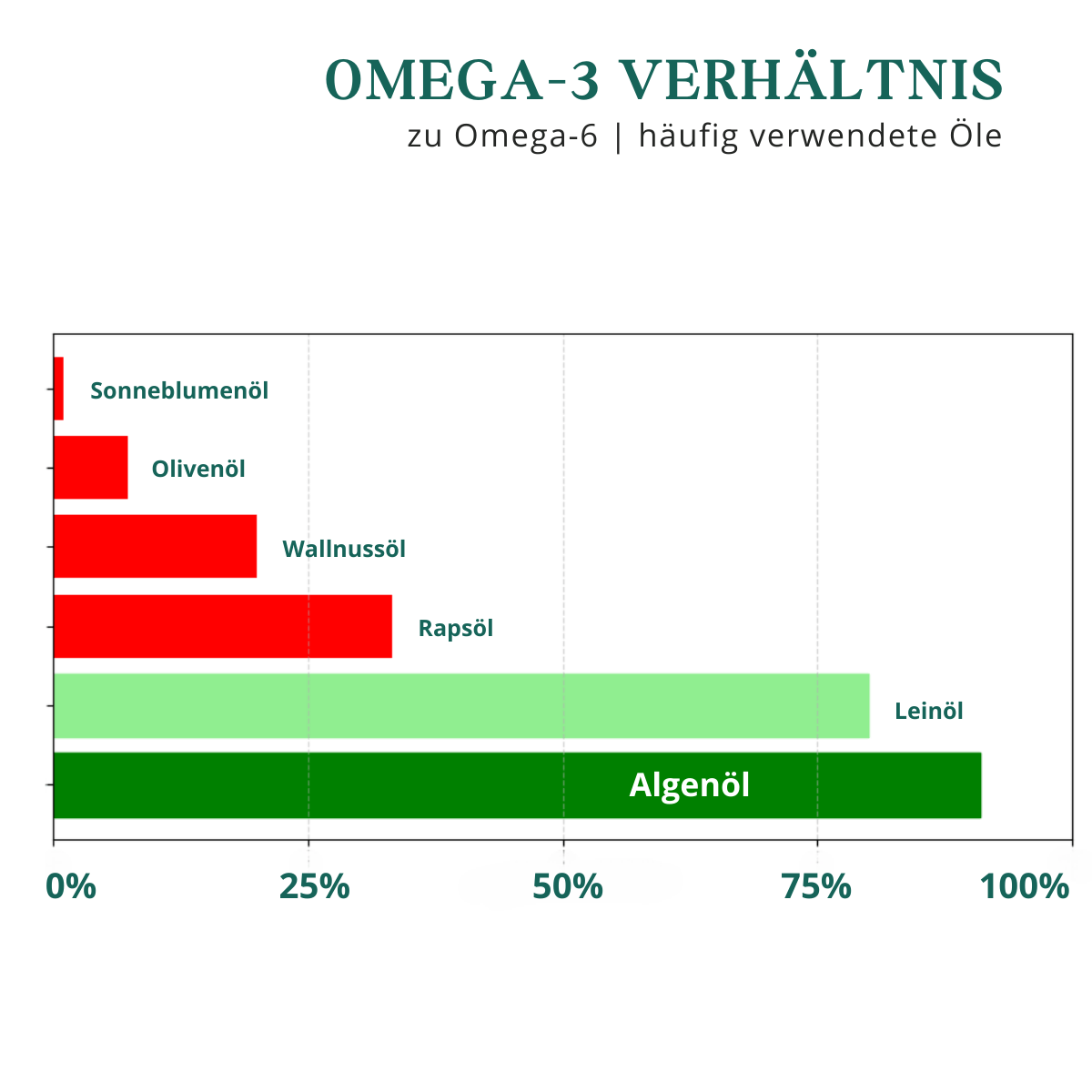
Linoleic acid (omega-6) and alpha-linolenic acid (ALA, omega-3) are essential for life; the body cannot produce them itself. The reference values set by the German Nutrition Society (DGE) correspond to a ratio of linoleic acid to ALA of approximately 5:1. However, in the typical German diet, people usually consume significantly more omega-6 than omega-3.
Omega-6 is widespread
Sunflower oil, maize germ oil and safflower oil, as well as many ready-made products and snacks, contain high levels of linoleic acid. Omega-6 is important, but is usually consumed in abundance through the typical diet.
Omega-3 often falls short
EPA and DHA are found mainly in oily sea fish and in algae. EFSA considers 250 mg of EPA and DHA per day adequate for healthy adults. Maternal intake of docosahexaenoic acid (DHA) contributes to the normal brain development and the normal development of the eye of the foetus and breastfed infants. The beneficial effect is obtained with a daily intake of 200 mg DHA in addition to the recommended daily intake for omega-3 fatty acids for adults (250 mg DHA and EPA).
Small adjustments in everyday life
Rapeseed oil, linseed oil and walnuts provide ALA; our algae oil provides EPA and DHA. The German Federal Institute for Risk Assessment (BfR) advises using oils high in omega-6, such as sunflower or maize germ oil, rather sparingly. The right ratio is what counts.
The ratio
Proportion of daily energy intake for adults. This corresponds to a ratio of approximately 5:1. EPA and DHA are not included in these figures; they are primarily found in oily fish and algae oil, for example in the form of capsules such as ours.
Understanding the composition
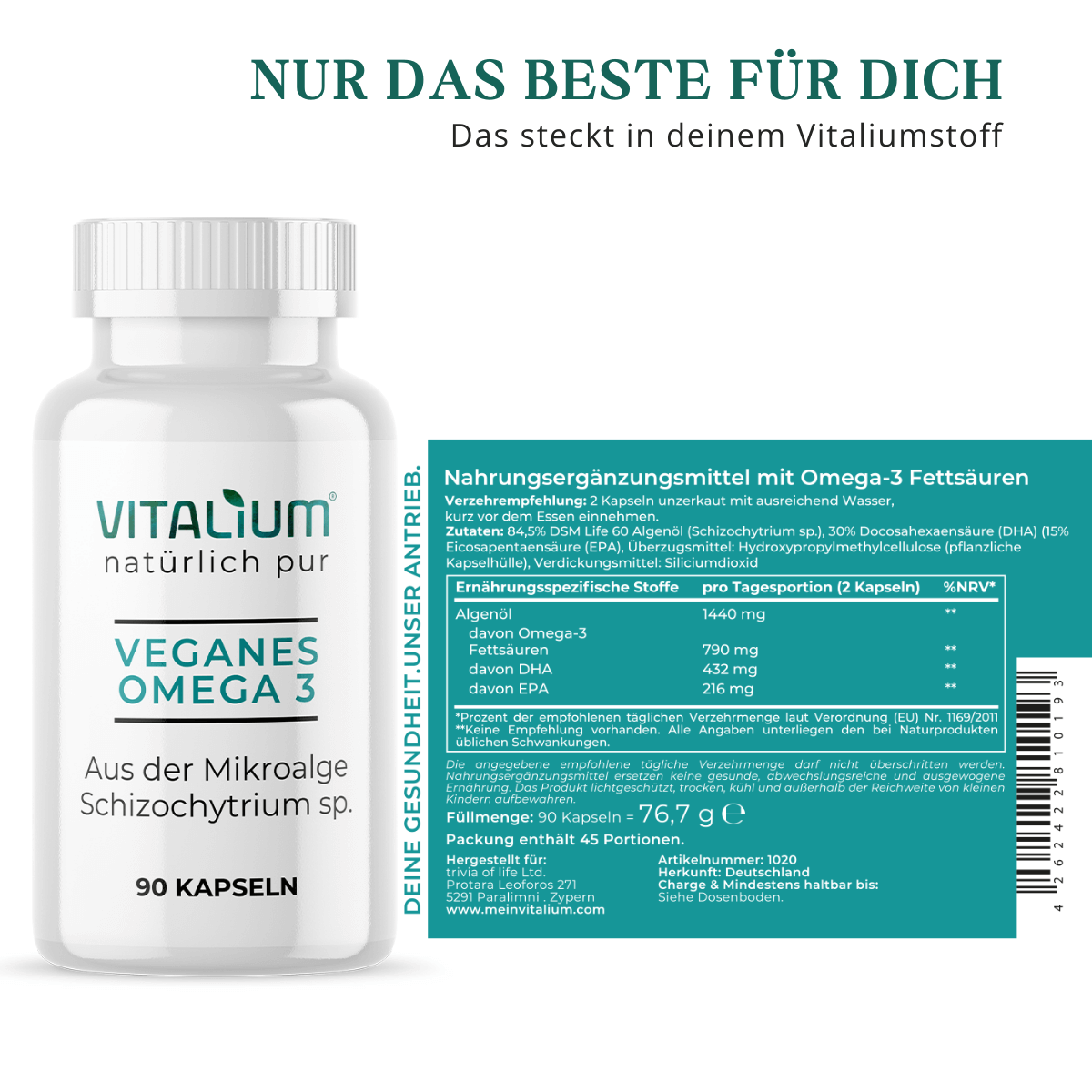
Two capsules contain 1,440 mg of algae oil with 648 mg of EPA and DHA, of which 432 mg is DHA and 216 mg is EPA. It is precisely this combined total of EPA and DHA that is used for comparison with other products.
DHA
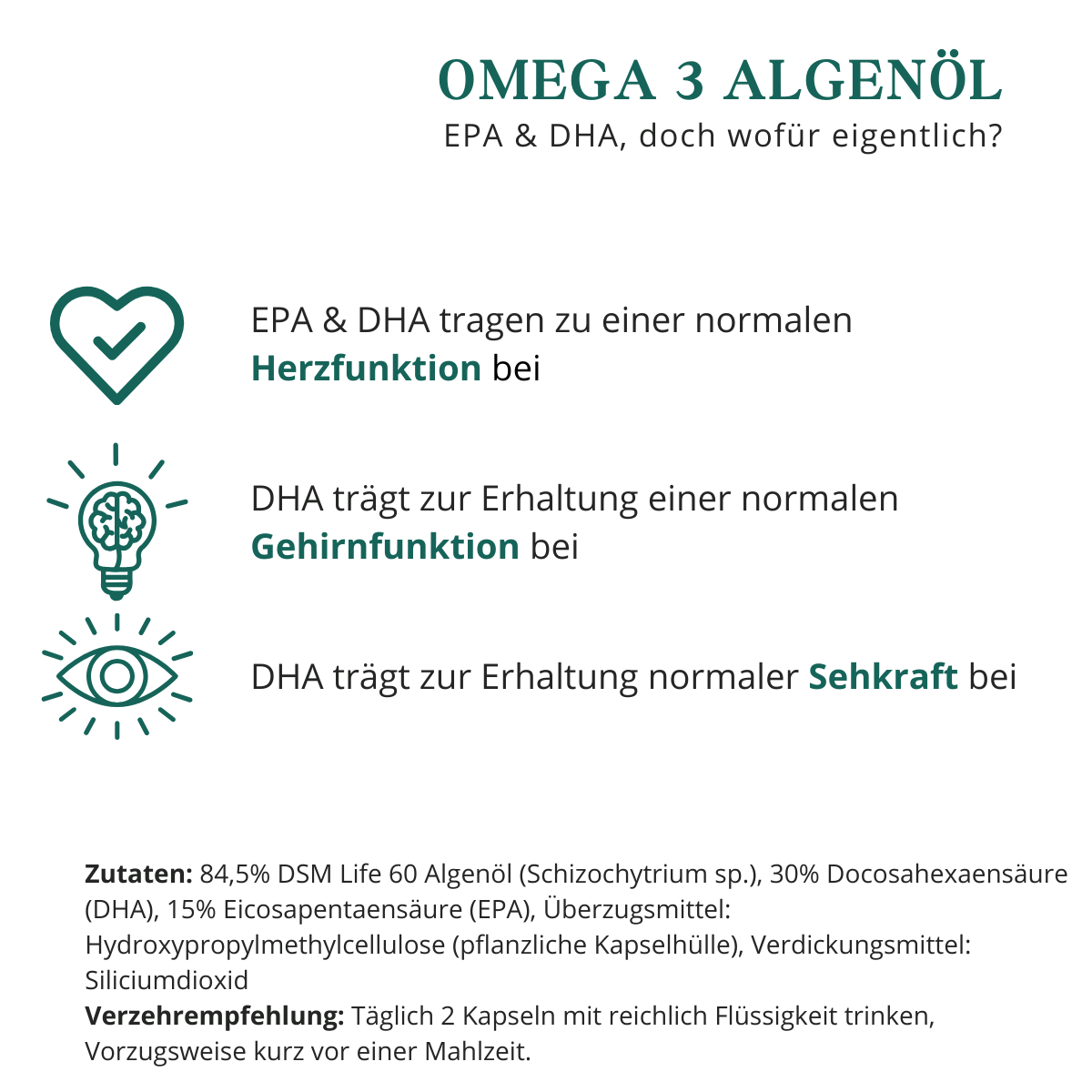
432 mg (67 %)Docosahexaenoic acid, two-thirds of the EPA and DHA content. DHA contributes to maintenance of normal brain function and normal vision.*
EPA
216 mg (33 %)Eicosapentaenoic acid, one third of the EPA and DHA content. EPA and DHA contribute to the normal function of the heart.*
Amounts per daily serving from 2 capsules. * The beneficial effect is obtained with a daily intake of 250 mg of DHA or 250 mg of EPA and DHA.

Understanding the dosage
There is no Nutrient Reference Value (NRV) for EPA and DHA. Guidance is provided by the conditions for authorised claims and the recommendations of the BfR.
EPA and DHA per daily serving
One daily serving provides 648 mg of EPA and DHA, of which 432 mg is DHA. The authorised claims apply from a daily intake of 250 mg of EPA and DHA (heart) or 250 mg of DHA (brain, eyesight).
BfR recommendation
The Federal Institute for Risk Assessment recommends a total daily intake of no more than 1.5 g of EPA and DHA from all sources. This should also take into account fish and other omega-3 supplements.
Check the EPA + DHA content
Many products state the amount of oil or the total omega-3 content. For comparison purposes, what counts is the sum of EPA and DHA per daily serving.
Transparent labelling
| Nährstoff | 2 capsules | % NRV* |
|---|---|---|
| Algae oil | 1,440 mg | – |
| of which omega-3 fatty acids | 790 mg | – |
| of which DHA | 432 mg | – |
| of which EPA | 216 mg | – |
* NRV = Nutrient Reference Value in accordance with Regulation (EU) No 1169/2011. – = no reference value available.
Ingredients & product information
Name: Food supplement containing omega-3 fatty acids
Contents: 90 vegan capsules for 45 daily servings
Ingredients: 84.5% DSM Life 60 algae oil (Schizochytrium sp.), 30% docosahexaenoic acid (DHA), 15% eicosapentaenoic acid (EPA), coating agent: hydroxypropyl methylcellulose (vegetable capsule shell), thickening agent: silicon dioxide
Recommended daily intake: 2 capsules daily with plenty of liquid, preferably shortly before a meal.
Warnings: Do not exceed the stated recommended daily dose. Food supplements should not be used as a substitute for a varied and balanced diet and a healthy lifestyle. Keep out of the reach of young children.
Storage: Store tightly sealed in a dry place, away from heat and direct sunlight.
Manufactured for: trivia of life Ltd., Protara Leoforos 271, 5291 Paralimni, Cyprus
Easy to use every day
Take two capsules daily with plenty of liquid, preferably just before a meal.

2 capsules
daily
90 capsules are sufficient for 45 days when taken at the recommended daily dose.
Two capsules daily
Together, they provide a daily serving of 648 mg of EPA and DHA.
Shortly before a meal
It is easiest to take them before a main meal, for example before lunch or dinner.
With plenty of liquid
A glass of water is sufficient to swallow the capsules comfortably.
Do not exceed the stated recommended daily dose. Food supplements should not be used as a substitute for a varied and balanced diet and a healthy lifestyle. If you are taking blood-thinning medication, have heart disease or are at risk of developing it, consult your doctor before taking this product.
What EPA and DHA contribute
Several health claims are authorised for the long-chain omega-3 fatty acids EPA and DHA, each linked to a minimum daily intake.
DHA
432 mg per daily serving
EPA and DHA
648 mg per daily serving
DHA during pregnancy and breastfeeding
432 mg DHA per daily serving
Health claims in accordance with Regulation (EU) No 432/2012 and 440/2011. Pregnant and breastfeeding women should consult their doctor or midwife before taking food supplements. Food supplements should not be used as a substitute for a varied and balanced diet and a healthy lifestyle.

Background
Omega-3 fatty acids are a type of polyunsaturated fatty acid. We must obtain alpha-linolenic acid (ALA) from our diet; the body can then use this to produce limited amounts of the long-chain omega-3 fatty acids EPA and DHA.
ALA is not the same as EPA and DHA
Linseed oil, chia seeds and walnuts provide the plant-based omega-3 fatty acid alpha-linolenic acid (ALA). The body can only produce small amounts of EPA and DHA from this. People who do not eat fish therefore obtain very little EPA and DHA from their diet.
Fish, algae or both
Oily sea fish such as salmon, herring or mackerel naturally contain EPA and DHA, but depending on the species and origin, they may also contain undesirable substances such as methylmercury. The BfR therefore provides dietary advice, for example for pregnant women. Our capsules containing algae oil from DSM are a vegan source of EPA and DHA, completely free from fish and animal-derived ingredients.

Added value in everyday life
A plant-based bowl with ingredients that provide ALA. Ideal for taking shortly before a meal.
Ingredients
Preparation
Good to know: Always use linseed oil cold and store it in a cool place. Walnuts and linseed oil provide ALA, while the capsules supplement EPA and DHA. This recipe idea is intended as inspiration; the nutrient content varies depending on the ingredients.
Product & quality

Vegan
Algae oil in vegan HPMC capsules.

GMP
Manufactured in accordance with GMP quality standards.

HACCP
Manufactured under HACCP-controlled processes.
Raw material
Algae oil from Schizochytrium sp. by DSM.
EPA (eicosapentaenoic acid) and DHA (docosahexaenoic acid) are long-chain omega-3 fatty acids. The body can only produce them to a limited extent from the plant-based alpha-linolenic acid (ALA), which is why dietary intake is essential. The main sources are oily sea fish and microalgae.
Two capsules contain 1,440 mg of algae oil with 790 mg of omega-3 fatty acids, of which 432 mg is DHA and 216 mg is EPA. Together, this amounts to 648 mg of EPA and DHA.
For adults who wish to supplement their diet with EPA and DHA, regardless of whether or not fish is part of their diet. They are particularly useful for anyone who rarely eats fish, follows a vegetarian or vegan diet, or does not like fish oil. For children and adolescents, please consult your paediatrician before use.
Anyone who eats fish once or twice a week, as recommended by the German Nutrition Society (DGE), including oily sea fish such as salmon, herring or mackerel, is already consuming EPA and DHA. An additional supplement is therefore not automatically necessary. Whether it makes sense for you depends on your overall diet.
Microalgae are the original source of EPA and DHA; fish only obtain them through their diet. However, over the course of their lives, both farmed and wild-caught fish can accumulate undesirable substances such as mercury. Our EPA and DHA come from microalgae cultivated in closed systems. The capsules are vegan, and no fish are caught for their production.
Linoleic acid (omega-6) and alpha-linolenic acid (omega-3) are both essential. The German Nutrition Society’s (DGE) reference values correspond to a ratio of linoleic acid to ALA of approximately 5:1. As many cooking oils and processed foods are rich in omega-6, people usually consume significantly more omega-6 than omega-3. The Federal Institute for Risk Assessment (BfR) advises using oils high in omega-6, such as sunflower or maize germ oil, sparingly and choosing foods rich in omega-3. EPA and DHA are found primarily in fish and algae oil.
Linseed oil is a good source of alpha-linolenic acid (ALA), a plant-based omega-3 fatty acid. However, the body converts only a small amount of ALA into EPA and DHA. EPA and DHA are essential for the authorised health claims relating to the heart, brain and eyesight. Linseed oil and algae oil therefore complement each other well.
Take two capsules daily with plenty of liquid, preferably just before a meal. It is more important to take the capsules regularly than to worry about the time of day.
We cannot promise any specific noticeable effect or a fixed point in time at which it will take effect. The authorised claims relate to a daily intake of 250 mg of EPA and DHA or 250 mg of DHA. Whether a supplement is advisable depends on your diet and personal circumstances.
The German Federal Institute for Risk Assessment (BfR) recommends a total intake of no more than 1.5 g of EPA and DHA per day from all sources. One daily serving provides 648 mg. Be sure to take into account fish and other omega-3 supplements and add the amounts together.
When taken in the recommended amount, omega-3 capsules are generally well tolerated; occasionally, belching or stomach discomfort may occur. Studies have observed an increased tendency to bleed when intake is significantly higher than the usual amount. If you are taking blood-thinning medication, have heart disease or risk factors for it, or are due to have an operation, discuss taking these supplements with your doctor beforehand.
For DHA, claims regarding the normal development of the brain and eyes in foetuses and breastfed infants are authorised. Please always discuss the use of food supplements during pregnancy and while breastfeeding with your doctor or midwife.
The capsules do not contain fish oil, but algae oil. Algae naturally have a slight, sea-like flavour of their own, which may occasionally be briefly noticeable when burping. It is therefore best to take the capsules just before a meal and with plenty of water.
Store the jar tightly closed, dry and protected from heat and direct sunlight, as omega-3 fatty acids are sensitive to light, heat and oxygen. At two capsules a day, 90 capsules last 45 days. With the subscription (Subscribe & save), the ‘Every 6 weeks’ interval fits this.
You can find background information at the Federal Institute for Risk Assessment and from the German Nutrition Society on the reference values for nutrient intake.
👍👍👍
Gehört in jede gute Hausapotheke das Zeug. Lieferung in 2 Tagen mit DHL, bin ich zufrieden mit
Ein Stück Siziliens daheim, das erfreut mich bei jedem Kochen von neuem, danke.
Bisher kann ich nicht klagen. Habe es bei Mundschleimhaut angewandt und es hat nicht enttäuscht
Preis Leistung soweit top - Lösung hat die gewünschte gelbliche Farbe und den bekannten Geruch, Verpackugn sehr hochwertig, viel besser als alles von Amazon bisher!
Das Produkt kam schnell an und war sorgfältig verpackt.
Mir gefällt, dass hier auf einen bekannten Markenrohstoff gesetzt wird.
Hochwertiger Rohstoff und angenehme Kapselgröße.
Sehr aromatisch und schön verpackt.
ich trinke täglich ca. 1 Esslöffel davon oder gebe die Menge meinem Frühstück hinzu (ohne erhitzen!), aufgrund der vielen polyphenole enorm wertvoll für eine gesunde fettaufnahme
Die Dosierung passt für mich sehr gut in den Alltag.
Ich habe das erste mal bestellt bei euch, Lieferung kam zügig, die Kapseln haben genau die Dosierung die ich täglich benötige. 5000 IE D3 plus 200my K2. Die Kapseln reichen für 90 Tage, so muss ich nicht so oft bestellen. Zur Wirkung kann ich nicht viel sagen, da ich schon seit Jahren D3 nehme und seit dem auch nie mehr krank war. Die Kapseln sind einfach zu schlucken. Also alles gut.
Sehr schnelle Lieferung!
Fast and Furious
Ihr habt uns trotz Lieferschwierigkeiten sehr dabei geholfen das das Paket endlich angekommen ist. Da könnt ihr ja nichts dafür. Durch den ständigen Kontakt hat man sich verstanden gefühlt auch wenn man Wut hatte sein Paket nicht zu erhalten. Danke dafür.

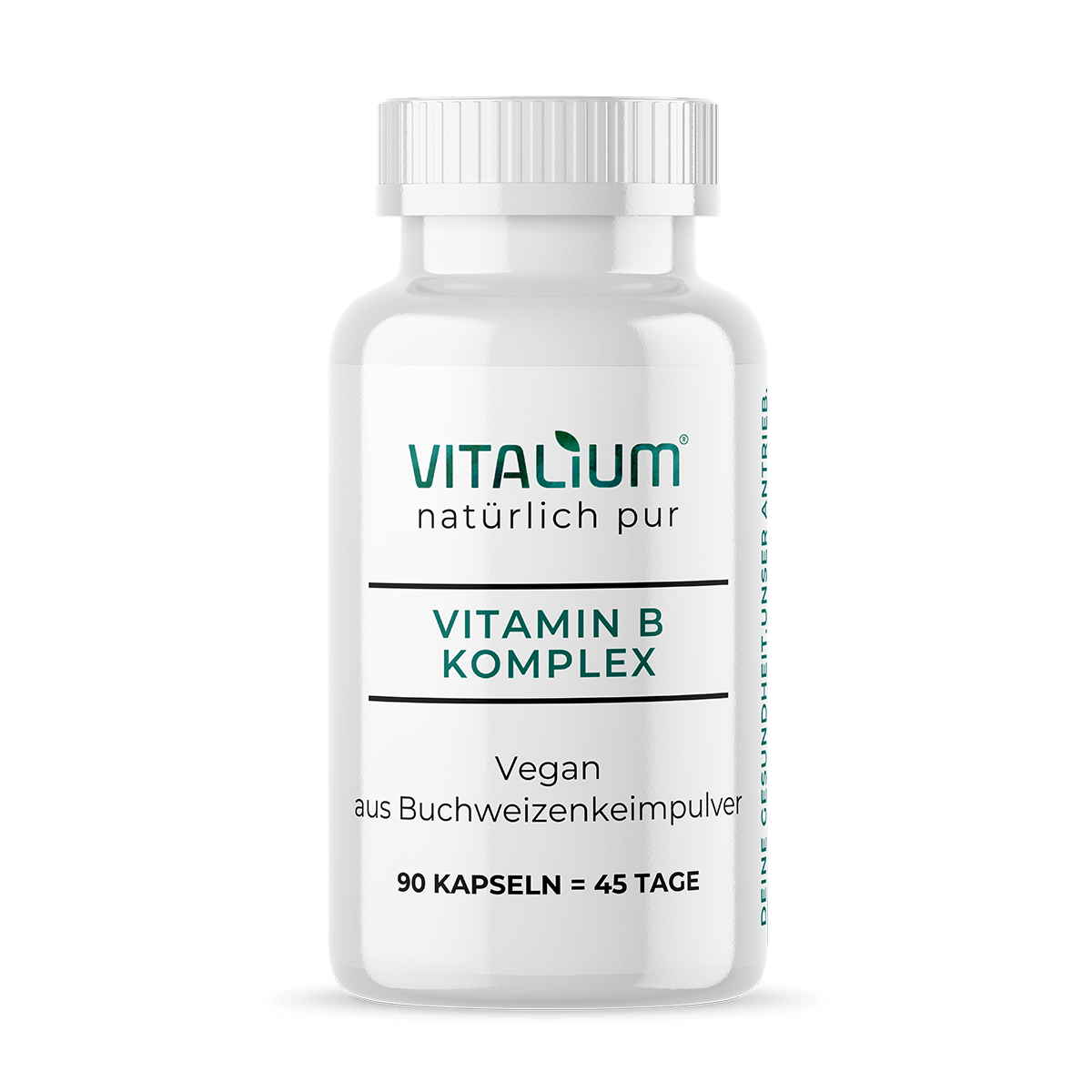
Omega-3 capsules
648 mg EPA and DHA per daily serving from algae oil, in 90 vegan capsules for 45 days.
Always stocked up on time: save 5% with Subscribe & save
All prices include VAT, plus shipping.