Magnesium is one of the best-known minerals of all. Many people first look into magnesium when they want to support their muscles, nerves, energy metabolism or general wellbeing. But anyone who wants to buy a magnesium supplement soon notices: not all magnesium is the same.
Magnesium citrate, magnesium bisglycinate, magnesium malate, magnesium taurate, magnesium oxide or magnesium carbonate: the choice is large and not always easy to understand. One term causes confusion particularly often: elemental magnesium.
In this article, we explain what elemental magnesium means, why the form of magnesium matters and what to look out for when buying a magnesium complex.
What does elemental magnesium mean?
Elemental magnesium describes the actual amount of pure magnesium in a magnesium compound. This matters because magnesium in food supplements does not usually occur on its own. It is almost always bound to another compound, for example citrate, glycinate, malate, taurate, oxide or carbonate.
An example: if a product states 200 mg magnesium citrate, this does not automatically mean that the whole amount is pure magnesium. Magnesium citrate consists of magnesium and citrate. The pure magnesium it contains is what is called elemental magnesium. This may, for example, be only 90 mg.
For you as a customer, the big number on the label is therefore not the only thing that counts. Much more important is how much elemental magnesium per daily serving the product contains. You will usually find this in the nutrition information under entries such as “magnesium” or “of which magnesium”.
Why not all magnesium is the same:
Magnesium can be bound to different substances. This compound influences how well the magnesium dissolves, how well it is tolerated and how well it suits daily use. That is why magnesium supplements differ not only in their dosage, but also in their composition.
A product can contain a lot of elemental magnesium and still not automatically be the best choice for everyone. Another product may use a different magnesium compound that better suits your daily routine, your tolerance or the intended use.
This is exactly why it is worth looking not only at the number of milligrams when buying, but also at the forms of magnesium used.
Organic and inorganic magnesium
Magnesium compounds are often divided into organic and inorganic forms. This distinction can help you put different products into context.
Organic forms of magnesium
Organic forms of magnesium are bound to organic compounds. These include, for example, magnesium citrate, magnesium bisglycinate, magnesium malate and magnesium taurate. These forms are often used in high-quality magnesium complexes because they are considered well tolerated and can bring different properties.
Inorganic forms of magnesium
Inorganic forms of magnesium include, for example, magnesium oxide, magnesium carbonate, magnesium chloride and magnesium sulphate. Some of these forms can provide a high proportion of elemental magnesium. That sounds attractive at first, but should not be the only factor in your buying decision.
Important: inorganic does not automatically mean bad. But organic does not automatically mean perfect either. What always matters is the overall picture of magnesium form, dosage, tolerance, transparency and personal needs.
Why magnesium oxide often shows high values:
Magnesium oxide is a very well-known form of magnesium. One reason is that magnesium oxide can provide a high proportion of elemental magnesium. As a result, products with magnesium oxide often look particularly high-dose on the label. It is also a very cheap raw material compared with other forms of magnesium.
For your buying decision, however, this number is not the only thing that matters. It also matters which compound is used, how well the product suits daily use and how transparently the amount of elemental magnesium is stated.
That is why many people today no longer look only at the highest magnesium figure, but also at the type of magnesium compound and how well it is tolerated in everyday life.
Which forms of magnesium are particularly interesting?
There are many different forms of magnesium. Particularly interesting are the compounds often used in modern magnesium complexes. Below, we take a closer look at the 4 most important forms:
Magnesium bisglycinate
Magnesium bisglycinate is an organic magnesium compound in which magnesium is bound to glycine. This form is often valued for being well tolerated. It is particularly interesting for people who want to take magnesium regularly and value a compound that is gentle to take. It is also one of the most expensive forms of magnesium on the market.
Magnesium citrate
Magnesium citrate is magnesium combined with citrate. Citrate is the salt form of citric acid. This form of magnesium is widespread and is often used for the daily magnesium supply.
Magnesium malate
Magnesium malate is magnesium combined with malate, the salt form of malic acid. This compound is particularly interesting if you are looking into magnesium and energy metabolism. Magnesium contributes to normal energy-yielding metabolism and to the reduction of tiredness and fatigue.
Magnesium taurate
Magnesium taurate combines magnesium with taurate. This form is often used in modern magnesium complexes and can complement other magnesium compounds well.
Why a magnesium complex can make sense:
A magnesium complex combines several magnesium compounds in one product. The advantage is that not just a single form is used. Instead, different magnesium compounds are combined, each of which can bring different properties.
This can be particularly useful if you do not just want to look at a high number of milligrams. A good magnesium complex takes into account the form of magnesium, the amount of elemental magnesium, tolerance and suitability for everyday use.
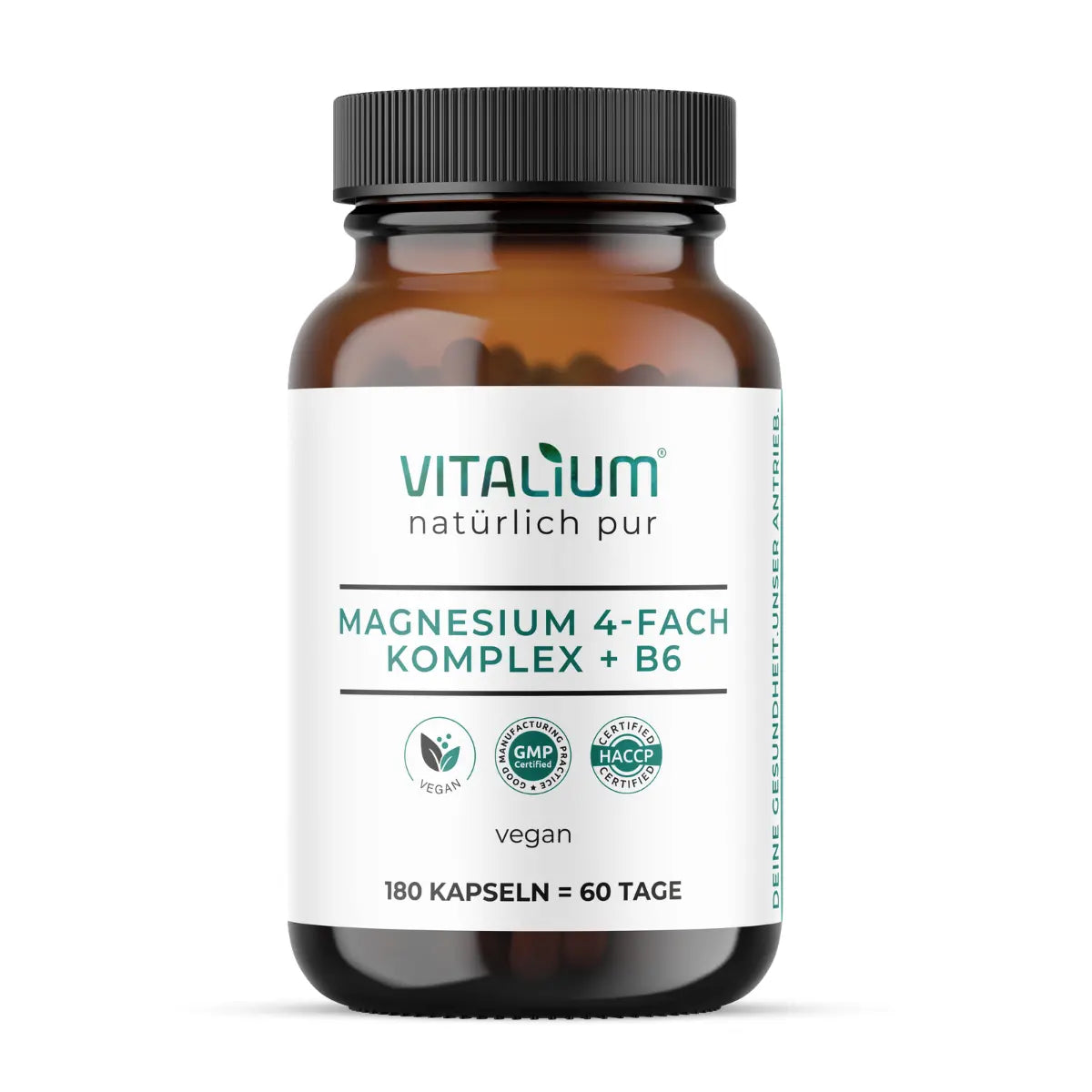
That is exactly why the Magnesium 4-fold complex from meinVitalium relies on four selected magnesium compounds: magnesium bisglycinate, magnesium citrate, magnesium taurate and magnesium malate. The formula contains no magnesium oxide and provides 300 mg elemental magnesium per daily serving. Vitamin B6 is also added, as this vitamin further increases the absorption & bioavailability of magnesium significantly.
Elemental magnesium: why this information is so important:
If you want to buy magnesium, always look for the amount of elemental magnesium. It shows you how much actual magnesium you get per daily serving.
It is important not to confuse two figures:
1. The amount of the magnesium compound, for example magnesium citrate or magnesium bisglycinate
2. The amount of elemental magnesium, i.e. the real magnesium content of that compound
Only the second figure shows you how much magnesium is really contained. That is why it is worth taking a close look at the nutrition information. A reputable product should clearly state how much magnesium each daily serving contains.
How much magnesium does the body need?
Magnesium requirements depend on age, sex, diet, activity and individual circumstances. For adults, the German Nutrition Society (DGE) gives estimated values of 350 mg magnesium per day for men and 300 mg per day for women. These values refer to the total magnesium intake from diet and from supplementary sources.
That is why it is important to remember: food supplements are no substitute for a balanced diet. They can be a useful addition if your normal diet is not always ideal or if you want to support your own supply deliberately.
Magnesium occurs naturally in many foods. Good sources include nuts, seeds, pulses, wholegrain products and green vegetables. A magnesium supplement should therefore always be seen as an addition, not as a replacement for a varied diet.
What is magnesium important for in the body?
Magnesium is involved in many normal body functions. Among other things, it contributes to normal muscle function, normal functioning of the nervous system and normal energy-yielding metabolism. Magnesium also contributes to the reduction of tiredness and fatigue and to the maintenance of normal bones.
That is exactly why magnesium is of interest to many people. It fits different everyday situations: people with an active lifestyle, anyone who wants to support their normal muscle function, and people who pay close attention to their mineral supply.
What should you look out for when buying magnesium?
When buying magnesium, it is worth taking a close look at the composition. A high number on the front of the pack is not enough. What matters is exactly what is in the product.
Pay particular attention to these points:
- Elemental magnesium: how much actual magnesium does the daily serving provide?
- Forms of magnesium: which compounds are used?
- Tolerance: does the product suit daily use?
- Transparency: are amounts and ingredients clearly stated?
- Additives: does the product do without unnecessary additives?
- Intake: does the daily serving fit easily into your daily routine?
- Diet: is the product vegan and does it suit your lifestyle?
Why tolerance is so important
Depending on the form and amount, magnesium can be tolerated differently. Some people react sensitively, especially if they take large amounts at once or combine several magnesium products at the same time.
That is why it makes sense not to exceed the recommended daily intake and to take magnesium with enough liquid. If you have a sensitive stomach, it can help to take it with a meal.
The German Federal Institute for Risk Assessment (BfR) recommends spreading magnesium from food supplements over at least two intakes per day. This guidance refers to additional magnesium taken in through food supplements.
If you have an existing medical condition, are pregnant or breastfeeding, or take medication regularly, you should seek medical advice before taking it.
Magnesium complex or a single form of magnesium?
Whether a magnesium complex or a single form of magnesium suits you better depends on your goal. A single form can make sense if you want to use exactly that compound in a targeted way. A magnesium complex is interesting if you want to combine several forms in a balanced formula.
For many people, a complex is particularly practical in everyday life. Instead of having to choose between citrate, bisglycinate, malate or taurate, a good complex combines several of these forms in one product.
The advantage is not that more forms are automatically better. The advantage lies in a well-balanced combination.
Who might a magnesium complex be interesting for?
A magnesium complex can be interesting for people who want to deliberately supplement their daily supply. Magnesium is particularly relevant for anyone who pays attention to muscle function, the nervous system, energy metabolism and general wellbeing.
Magnesium can also play a useful role in an active daily life. Exercise, stress, little sleep or an unbalanced diet can make you pay more attention to your own nutrient supply.
But one thing remains important: magnesium is not a miracle cure. It does not replace sleep, a good diet or a healthy lifestyle. It can, however, be a valuable addition if it is chosen sensibly and taken responsibly.
Frequently asked questions about elemental magnesium:
1. Is elemental magnesium the same as magnesium?
Elemental magnesium is the pure magnesium content of a magnesium compound. If a product contains magnesium citrate, for example, this compound does not consist of magnesium alone. The amount of elemental magnesium shows how much actual magnesium is contained.
2. Is organic magnesium always better?
Not automatically. Organic forms of magnesium such as citrate, bisglycinate, malate or taurate are often popular and considered well tolerated. Even so, it always depends on the overall formula, the dosage and individual tolerance.
3. Why do some products contain magnesium oxide?
Magnesium oxide can provide a high proportion of elemental magnesium. That is why the magnesium figure on the label often looks particularly high. When buying, however, you should not only look at the amount, but also at the compound used and your personal tolerance.
4. When is the best time to take magnesium?
This depends on the product and your personal tolerance. Many people take magnesium with a meal and enough liquid. With larger daily servings, spreading it over the day can make sense.
5. Can you take magnesium every day?
Magnesium can be taken every day as long as you stick to the recommended daily intake and the product suits your personal situation. If you combine several food supplements or have health questions, seek medical advice first.
Our conclusion: the form of magnesium counts as much as the amount
Elemental magnesium is one of the most important figures when you want to compare magnesium supplements. It shows you how much actual magnesium each daily serving contains. Even so, this number should never be looked at on its own.
Just as important are the form of magnesium, tolerance, transparent labelling and whether the product fits your everyday life. A high-quality magnesium complex can be a sensible choice here because it combines several selected magnesium compounds.
If you are looking for a magnesium supplement that relies on four selected magnesium compounds and contains no magnesium oxide, you can find our Magnesium 4-fold complex from meinVitalium here.
Sources and further information:
- German Nutrition Society (DGE): reference values for magnesium
- German Federal Institute for Risk Assessment (BfR): assessment of the maximum daily amount of magnesium from food supplements
- Regulation (EU) No 432/2012: authorised health claims for magnesium
As always, thank you for your time and attention. We hope we have been able to give you a clear insight into elemental magnesium, forms of magnesium and magnesium complexes. If you have any questions about magnesium or our product, feel free to send us an email. We will help you as best we can.