
Put on protective equipment
Wear gloves and work on a wipeable surface. Methylene blue stains skin, clothing and surfaces heavily.



Pay securely and easily with:


Your payment information is processed securely. We do not store credit card details nor have access to your credit card information.

Good to know
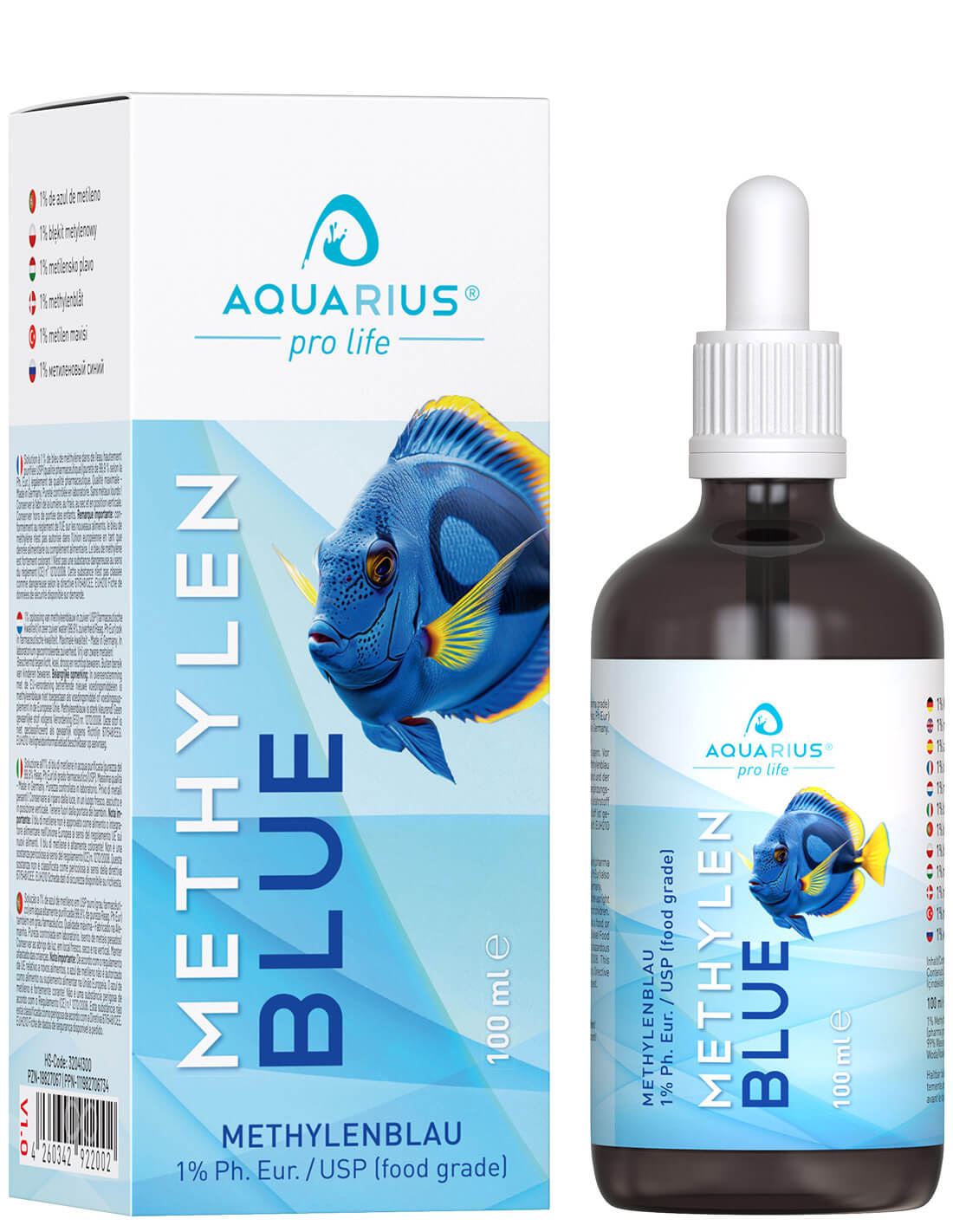
One of the best-known dyes in the natural sciences, shown here as a ready-to-use 1% solution.
A classic dye
Methylene blue was first produced in 1876 by Heinrich Caro at BASF and was originally developed for dyeing textiles. Chemically, it belongs to the phenothiazine dye family. Its chemical name is methylthioninium chloride.
A standard in microscopy
Because methylene blue binds to cell nuclei and bacteria, it makes structures visible that are barely discernible when unstained. It has therefore been one of the basic dyes used in biology and microbiology since the 19th century.
Blue or colourless
Methylene blue is a redox dye. In its oxidised form, it is deep blue; when reduced, it forms colourless leucomethylene blue. This colour change makes it a popular indicator in laboratory experiments.
Areas of application
Typical applications in research, training and teaching. The relevant laboratory regulations apply when carrying out experiments.
Staining cells
Plant cells, for example from onion skin, can be stained using a diluted solution. The cell nuclei then stand out clearly in blue.
Making bacteria visible
In microbiology, methylene blue is used as a simple stain to assess the shape and arrangement of bacteria in a smear.
Testing yeast
In brewing and baking laboratories, methylene blue is used to distinguish between living and dead yeast cells: dead cells turn blue, while living cells decolourise the dye.
Redox indicator and teaching
Due to the colour change from blue to colourless, methylene blue is suitable for experiments involving oxidation and reduction, such as the well-known ‘blue bottle’ experiment in chemistry lessons.
Working with the solution
For many staining applications, the 1% solution is too strong. When diluted with water, it can be precisely tailored to the experiment.

10 mg
Methylene blue per millilitre of solution
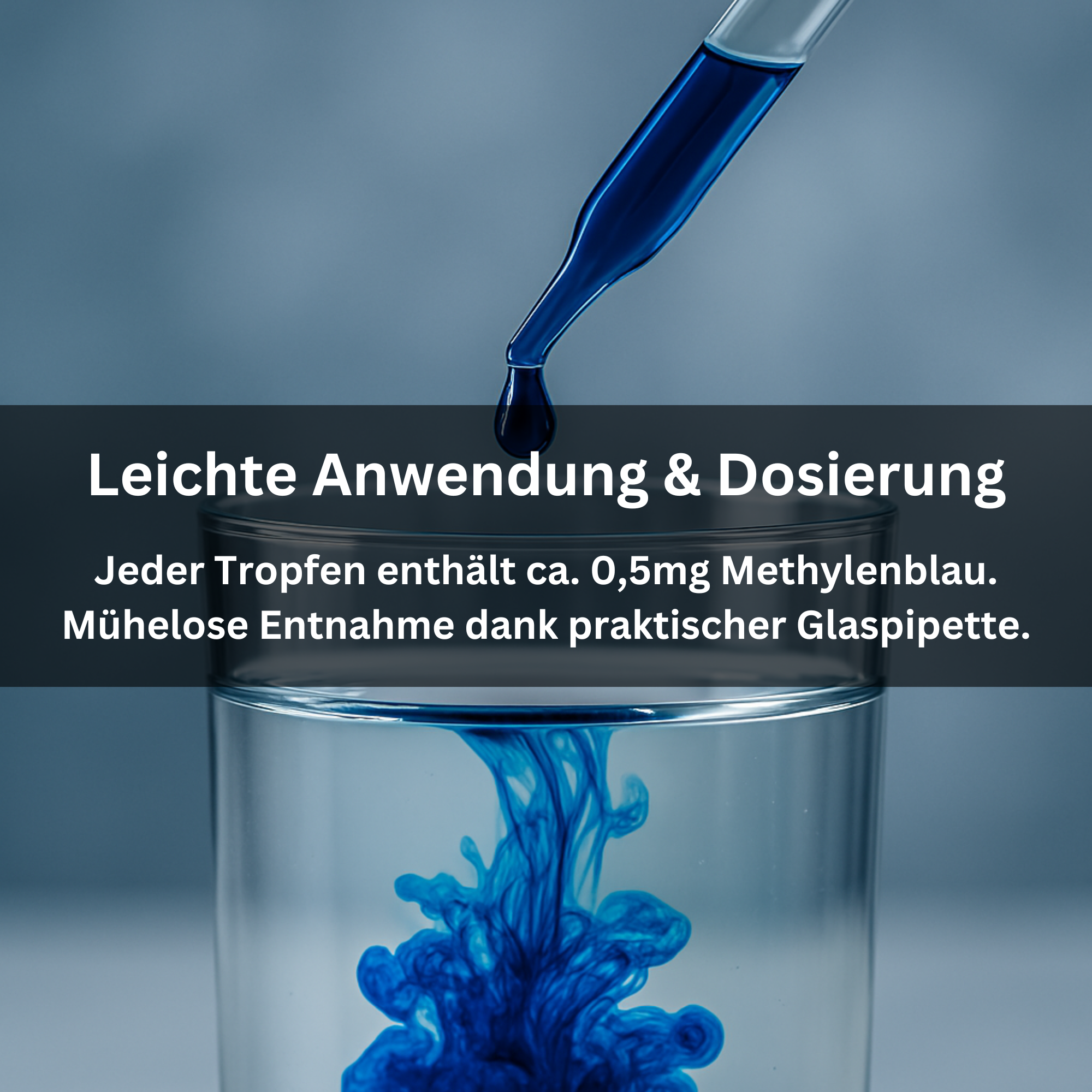
This corresponds to 1%. Around 20 drops from the pipette make up one millilitre.
Put on protective equipment
Wear gloves and work on a wipeable surface. Methylene blue stains skin, clothing and surfaces heavily.
Dispense the solution
Dispense the required amount using the pipette. Around 20 drops correspond to one millilitre.
Dilute with water
Add the solution to distilled or demineralised water and mix thoroughly. You can find the quantities for common concentrations in the dilution table.
Label and seal
Label diluted solutions with the contents and date. Immediately reseal the original bottle tightly and store it away from light.
For laboratory, research and teaching use only. Not for ingestion and not for use on humans or animals. Not a foodstuff, not a food supplement, not a medicinal product.
Dilution table
| Target | 1% solution | Water |
|---|---|---|
| 0.5 % | 5 ml | 5 ml |
| 0.1 % | 1 mlapprox. 20 drops | 9 ml |
| 0.05 % | 0.5 mlapprox. 10 drops | 9.5 ml |
| 0.01 % | 0.1 mlapprox. 2 drops | 9.9 ml |
For 10 ml of ready-to-use solution, calculated at approximately 20 drops per millilitre. For larger quantities, multiply the values accordingly.
Safety
According to the manufacturer, the solution is not a hazardous substance within the meaning of the CLP Regulation (EC) No 1272/2008. A safety data sheet is available on request via our contact form.
Do not ingest
The solution is intended exclusively for laboratory, research and teaching purposes. It is not intended for ingestion or for use on humans or animals. Methylene blue is not authorised in the EU as a foodstuff or food supplement.
Strongly staining
Wash splashes on the skin off with soap and water. Stains on textiles and porous surfaces often cannot be completely removed.
Storage
Store in the original labelled bottle, protected from light, in a cool, dry place and in an upright position. Keep out of the reach of children and away from food.
In case of an accident
In case of eye contact, rinse gently with water for a few minutes. If swallowed, rinse the mouth and seek medical advice, showing the label. Berlin Poison Control Centre: 030 19240.
Transparent labelling
| Information | Value |
|---|---|
| Substance | Methylene blueMethylthioninium chloride |
| Concentration | 1 %10 mg per ml |
| Solvent | Waterhighly purified according to Ph. Eur. |
| Raw material grade | USP |
| CAS No. | 61-73-4 |
| EC No. | 200-512-2 |
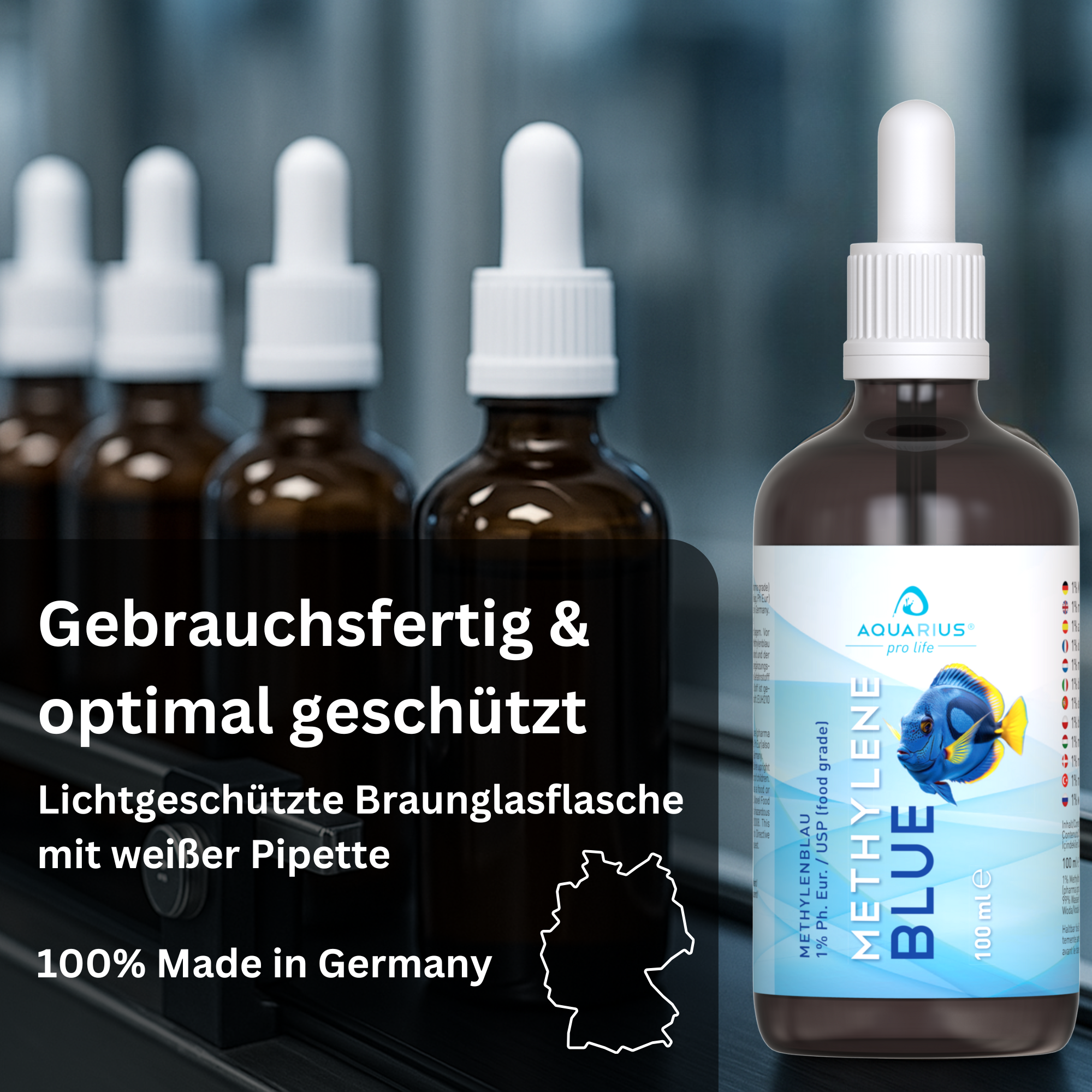
| Contents | 100 mlAmber glass bottle with pipette |
The USP and Ph. Eur. are quality specifications for the raw material and water respectively. They do not specify any intended use.
Product details
Name: Methylene blue solution 1%
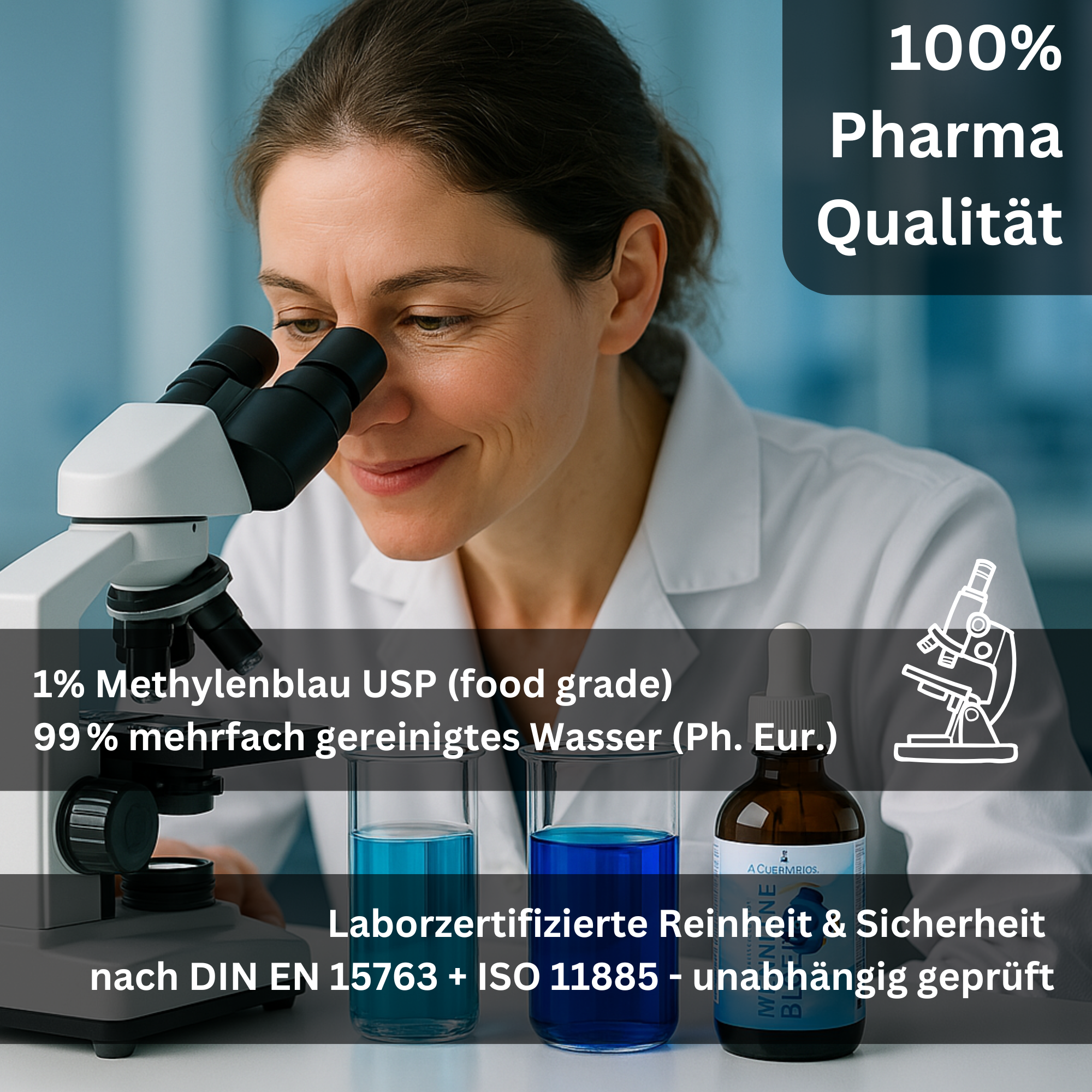
Composition: 1% methylthioninium chloride (ultra-pure, USP), 99% highly purified water (Ph. Eur.)
Use: For laboratory, research and teaching purposes only. Not for ingestion and not for use on humans or animals. Not a foodstuff, not a food supplement, not a medicinal product.
Labelling: According to the manufacturer, not a hazardous substance within the meaning of Regulation (EC) No 1272/2008. EUH210: Safety data sheet available on request.
Storage: Store protected from light, in a cool, dry place and in an upright position. Keep out of the reach of children.
Made in: Germany
Manufacturer: AQUARIUS pro life Ltd., Lordou Vyronos 61-63, 6023 Larnaca, Cyprus
Product & quality
Raw material grade
Methylthioninium chloride of USP quality.
Highly purified water
Solvent in accordance with the European Pharmacopoeia.
Amber glass bottle
Protected from light, with a pipette for dispensing.
Manufacture
Manufactured in Germany.
Primarily for staining in microscopy, such as of cell nuclei, bacteria or yeast cells, and as a redox indicator in chemical experiments. It is also a classic in biology and chemistry lessons.
The solution contains 1 g of methylene blue in 100 ml, i.e. 10 mg per millilitre. Around 20 drops from the pipette make one millilitre. The rest of the solution is highly purified water according to Ph. Eur.
With distilled or demineralised water. For 10 ml of a 0.1% solution, take 1 ml (approx. 20 drops) of the 1% solution and 9 ml of water. Further values can be found in the dilution table.
That depends on the specimen and the laboratory protocol. For simple staining, solutions between 0.1 and 1% are frequently used. If in doubt, start with a diluted solution and stain again if necessary.
USP stands for the United States Pharmacopeia, and Ph. Eur. for the European Pharmacopoeia. Both set out quality requirements for substances. In this context, they describe the quality of the dye and the water, not their intended use.
Methylene blue is a redox dye. When reduced, it forms colourless leucomethylene blue. It can turn blue again upon contact with oxygen. It is precisely this effect that is demonstrated in the ‘blue bottle’ experiment.
No. The solution is intended exclusively for laboratory, research and teaching purposes. Methylene blue is not authorised in the EU as a foodstuff or food supplement, and our solution is not a medicinal product.
No. We supply the solution exclusively for laboratory, research and educational purposes. It is not intended for use on animals.
According to the manufacturer, the 1% solution is not a hazardous substance within the meaning of the CLP Regulation. A safety data sheet is available on request.
On the skin, wash with soap and water; the colour will fade after a while. Stains on textiles, wood or grouting often cannot be completely removed. You should therefore wear gloves and work on a wipeable surface.
Protected from light, cool, dry and upright in the original labelled bottle, separate from food and out of the reach of children.
Amber glass protects the contents from light. This is standard practice for dye solutions to ensure they remain stable throughout their shelf life.
Gently rinse the eyes with water for a few minutes. If swallowed, rinse the mouth and seek medical advice, showing the label. Berlin Poison Control Centre: 030 19240.
Yes, on request via our contact form. The label carries the statement EUH210: Safety data sheet available on request. You can already find the CAS no. and EC no. here on this page under Product data.

Methylene blue 1%
1% in highly purified water, 100 ml amber glass bottle with pipette. For laboratory, research and educational use only. Not for ingestion and not for use on humans or animals. Not a foodstuff, not a food supplement, not a medicinal product.
All prices include VAT, plus shipping.